


The spine has the biomechanical function to keep the body upright and flexible, but as well it has the task to protect the central nervous system. The spinal cord is located inside the spinal column and between each two vertebraes arises a nerve that leaves the spine towards a particular part of the body. This could be a muscle, organ or part of the skin. By positional changes in the spine nerves could get pinched. This pressure may cause an irritation of the nerve. This, as we know from a hernia in which the nerve is irritated and pain is felt in the leg. The leg however is not the problem.
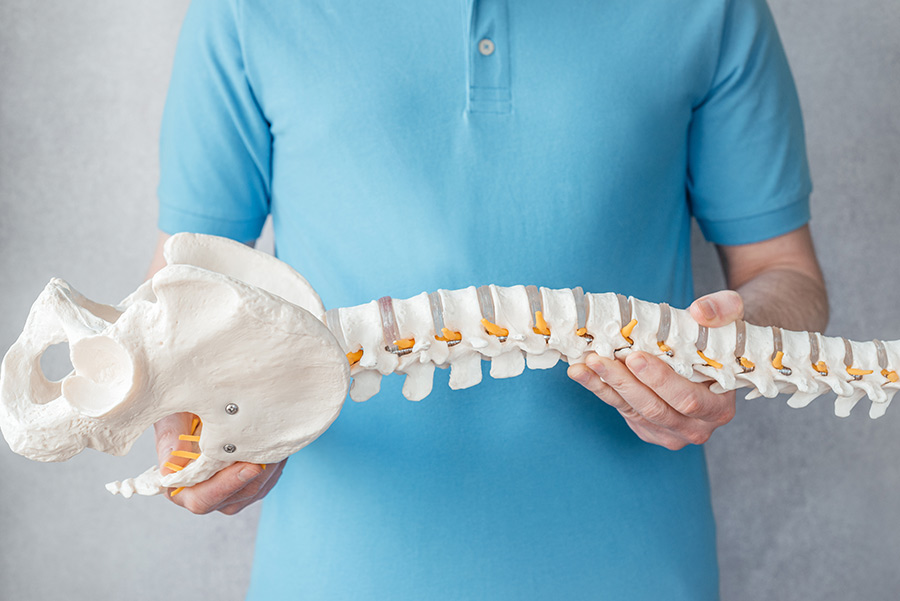
If a nerve that runs to a part of body is irritated, this will not necessarily be perceived as pain. Only 10% of all nerves in the body register an irritation as pain. This means that these trapped nerves are not working for a 100%, but this is not directly noticed as pain. Compare it with a garden hose that is a bit depressed, there will be a smaller flow of water. So if at different locations in the spine, which is often the case, nerves, are irritated, this will alter the function of the body negatively. Symptoms of this phenomenon include heartburn, palpitations, asthmatic attacks, excessive hiccups and more vague symptoms.
Researchers are gathering scientific evidence about this phenomenon. A lot of students use this issue for their final project as it is interesting and especially in the future this can be of great importance for health in general.
Regular monitoring and treatment of the spine is necessary for the body to be free of the interference of the nervous system and thus to let the body work at an optimal level of function, so even if you feel no pain at all.